
How to Reprogram Your Subconscious During Sleep: What Actually Works
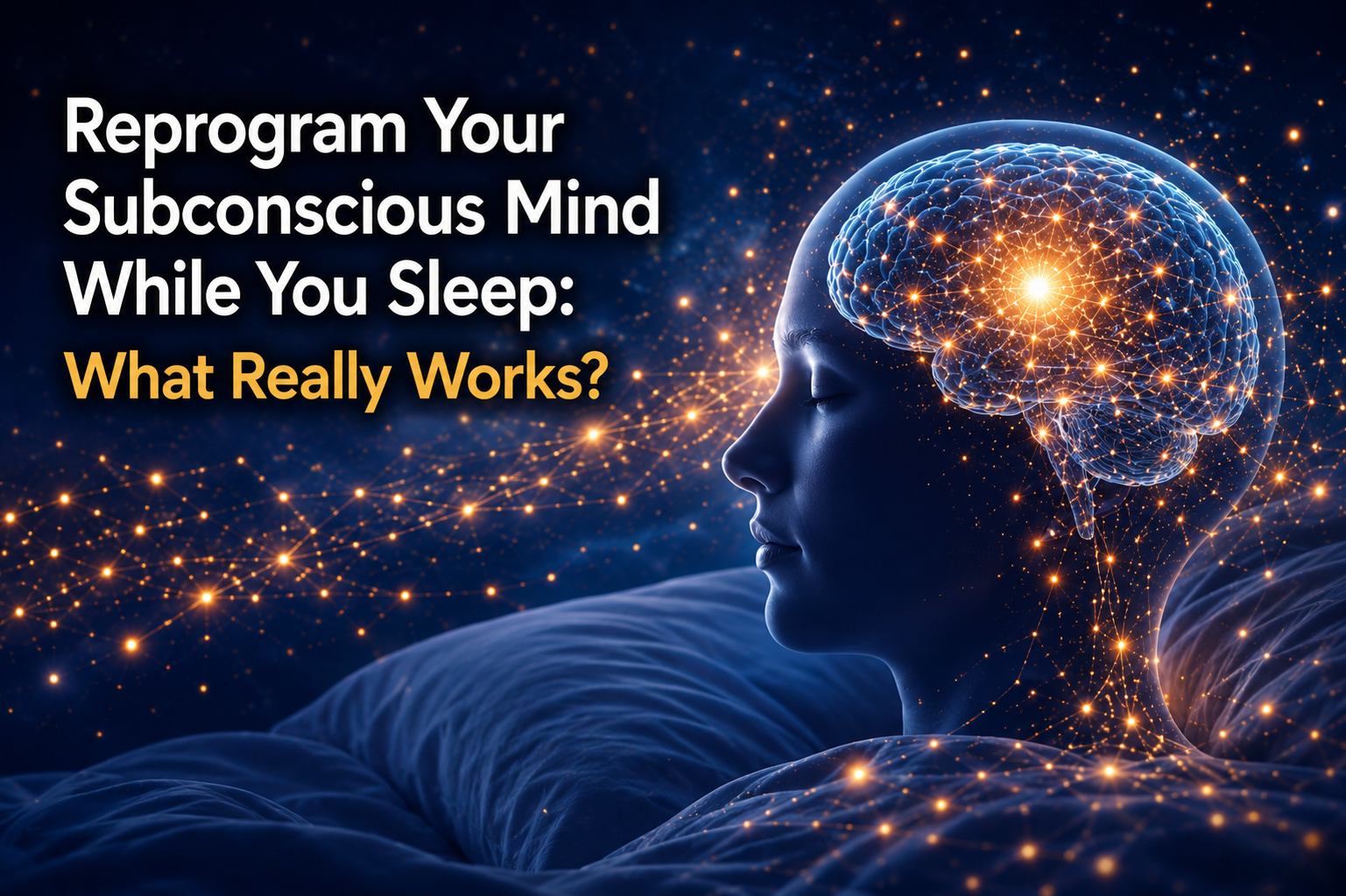
Many people try to consciously change their behavior, yet they keep falling back into the same patterns over and over again. They set goals, stay motivated for a short time, and then slip back. Eventually, they begin to feel that lasting change simply isn’t possible.
But what if the problem isn’t what you’re trying to change, but when you’re trying to change it?
Most people are working against their own brain. They try to consciously control themselves during the day, while old patterns continue running beneath the surface. That’s exactly why change often feels exhausting and unstable.
Here’s the crucial point: your subconscious is not equally active or accessible all day long. There are specific moments when your brain becomes especially receptive to new information.
And those moments happen naturally every single day: during the transition between wakefulness and sleep.
Once you understand how to reprogram your subconscious during sleep, change starts to feel completely different. Not like forced discipline, but as a process that feels more natural and, at the same time, more sustainable.
The SYNEA Method: Mental Reprogramming Through Audio Sessions
A core part of the method includes 7 audio sessions designed to directly engage your subconscious mind and create lasting changes in your thought patterns.
They make use of your brain’s natural states in the morning and at night to help transform deeply rooted limiting beliefs in a targeted way.
Alpha and Theta brain states make your mind especially receptive to lasting change

- Deeper mental relaxation
Alpha and Theta states help calm your nervous system and support a deeper sense of inner calm
- Embed new thought patterns into your subconscious mind
Through targeted repetition, new neural pathways are created and become deeply embedded in your subconscious mind
- Lasting transformation of your thought patterns
Your brain becomes more receptive to change, allowing new ways of thinking to become stable over time
Why Sleep Alone Doesn’t Change Your Behavior
Many people believe their behavior will automatically change if they simply “sleep on it.” They assume the brain will find new solutions during sleep and that old patterns will gradually disappear over time. The idea sounds comforting, but in reality, it can be misleading.
It’s true that your brain processes information, emotions, and experiences while you sleep. However, it only changes what is actively fed into the system. Without intentional input, existing structures remain stable and often become even stronger. That’s why the opposite of what you want frequently happens: instead of developing new ways of thinking, old patterns continue to deepen unconsciously.
This means that sleep alone does not create change. It simply processes what is already there. If nothing is intentionally directed, your system continues operating on autopilot and repeatedly returns to the same ways of thinking and behaving.
The real difference lies in whether you let this state happen passively or learn to use it intentionally. Only when your subconscious receives specific input during this phase does the possibility of changing deeply rooted patterns truly begin.
And this is exactly where mental reprogramming during sleep starts.
Change Your Mental Patterns: How It Really Works
To create lasting change in your deepest mental patterns, motivation alone is not enough.
You need to intentionally engage with your subconscious and actively reshape the patterns already in place.
This is the process that actually works:

1. Recognize
Bring your unconscious limiting beliefs into awareness and understand why they continue to shape your behavior.
2. Renew
Intentionally replace old limiting thought patterns with new beliefs that reshape the way you think.
3. Integrate
Embed new ways of thinking deeply into your subconscious so they can automatically transform your behavior.
Reprogram Your Subconscious During Sleep: How Real Change Begins
If you want to reprogram your subconscious during sleep, simply sleeping and hoping for change is not enough. What truly matters is how you use this phase and what kind of input your brain receives during these highly receptive moments.
It is precisely during the transition between wakefulness and sleep, especially in alpha and theta states, that your subconscious becomes more open to new information. During these phases, your brain does not only process experiences, but also begins to reinforce or reshape existing patterns.
This means that when you intentionally provide new input, new neural connections can form while old mental and behavioral patterns gradually lose their influence.
This is the key difference between random change and intentional mental reprogramming. Instead of leaving the process to chance, you consciously use your brain’s natural states to create lasting changes in the way you think.
And this is exactly the moment when change stops feeling like a constant struggle and begins to become more automatic over time.
Change is possible.
And it begins in the subconscious.
You can’t force change in your mental patterns through daily effort alone.
But you can learn to intentionally use your subconscious, especially during the moments when your brain is most receptive.